




Please Leave Us A Message
Privacy statement: Your privacy is very important to Us. Our company promises not to disclose your personal information to any external company with out your explicit permission.
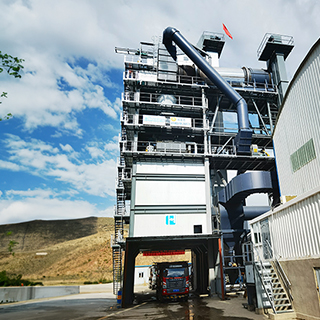
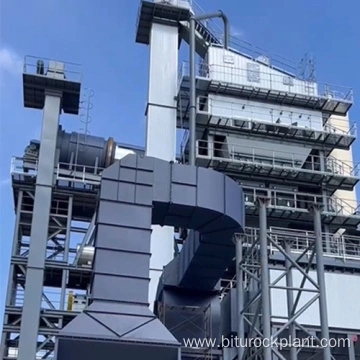
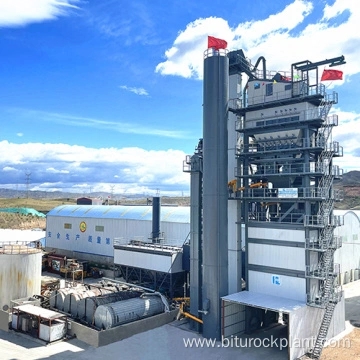
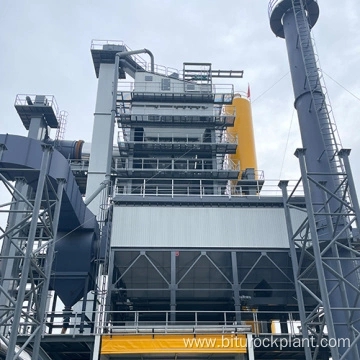
After decades of development, especially in the past decade, the functions of asphalt mixing equipment have become more diverse, including fixed type, mobile type, continuous type, intermittent type, cold regeneration, hot regeneration, etc.
1.1 Selection of fixed and mobile mixing equipment
Mobile asphalt mixing equipment features low output, compact structure, convenient relocation and small site occupation. It is particularly suitable for projects with small quantities of work, unstable construction sites or those that require frequent relocation of construction sites. Fixed asphalt mixing equipment, on the other hand, features high output, complete structural functions, reasonable layout, and large space occupation. It is suitable for projects with fixed construction sites, large volumes of work, and high requirements for equipment output. For the rapid maintenance and repair of high-grade highways, small mobile asphalt mixing equipment can be adopted.
1.2 Selection of continuous Stirring Equipment and Intermittent Stirring Equipment
The Road construction Specifications and relevant standards for mixing equipment (GB/T17808) do not impose mandatory regulations on the use of continuous and intermittent mixing equipment. Continuous asphalt mixing equipment adopts continuous metering and continuous mixing and discharging. Its notable features include a simple equipment structure, relatively few components, low installation height, and small installed power. Intermittent asphalt mixing equipment adopts a method of batch weighing and batch mixing and stirring. Its characteristics include complete structural components, a large number of components, generally high installation height of the equipment, and large installed power, etc. Although both forms of stirring equipment can meet the functional requirements, certain considerations still need to be made in the selection.
(1) Due to the different metering and mixing methods of continuous and intermittent mixing equipment, continuous mixing equipment is more suitable for the large-scale continuous production of a certain mixture, while intermittent mixing equipment has greater flexibility in adjusting gradation.
(2) The metering of the continuous mixing equipment is located at the aggregate feeder. It is necessary to continuously measure and supply coarse and fine materials through an electronic belt scale. Therefore, the continuous equipment requires a stable source of coarse and fine aggregates, as well as stable specifications, classification, moisture content and dust rate of aggregates. The metering of intermittent mixing equipment is located in the main mixing building. The aggregates measured have undergone rough metering, drying and heating, and screening. The quality of the materials is already very stable during metering, so the supply requirements for coarse and fine aggregates are not very strict. Of course, poor classification of aggregate specifications will lead to a decrease in the output and efficiency of intermittent equipment and an increase in energy consumption.
(3) When the continuous mixing equipment is in operation, various mixing materials are mixed in different addition areas according to their gradation. It is required that the supply of each material must be continuous without interruption. Any supply interruption or instability will cause the equipment to stop or the gradation to be unstable, and the equipment will face readjustment. Intermittent stirring equipment, on the other hand, can perform weighing and waiting when a certain material is in short supply or interrupted, without stopping the entire machine. Therefore, when the supply of raw materials is stable, continuous stirring equipment can be selected; otherwise, only intermittent stirring equipment can be chosen.
(4) In terms of structure, the main unit of the continuous mixing equipment has no hot aggregate elevator or vibrating screening device, and does not have a separate mixing system. Its structure is simpler compared to the intermittent mixing equipment, with fewer component systems and is convenient for installation and maintenance.
(5) Whether there are any tall buildings restricted in the area where the mixing plant is located. If there are height restrictions on the entire mixing equipment, using a continuous mixing equipment with a lower height can meet the functional requirements. Of course, when the intermittent equipment adopts a lower height, significant structural changes need to be made to the entire equipment, which is quite different from the popular intermittent stirring equipment in the market.
(6) Due to the obvious differences in the mixing process between continuous and intermittent asphalt mixing equipment, the quality control methods for the mixing process are also different. Therefore, the choice of which mixing method to use mainly depends on whether the owner recognizes and accepts the relevant construction techniques and quality standards of continuous asphalt mixing.
1.3 Selection of Regeneration System
With the widespread recognition of old asphalt recycling throughout the industry and the national requirements for carbon reduction and emission reduction, the recycling of old asphalt pavements, especially on-site mixing recycling, has increasingly become a standard configuration for asphalt mixing equipment. When choosing a recycling system, the following issues should be considered: whether the equipment will be used for road maintenance construction now or in the future, or whether some old asphalt materials will be used as aggregates. If so, a recycling system needs to be configured.
Judging from the current plans for setting up mixing plants in various regions, each mixing plant will cover a certain area in the future and be responsible for road maintenance, new road construction, and the recycling and reuse of old materials within the area. Therefore, considering the completeness of the functions of the mixing equipment, its environmental friendliness, and its ability to adapt to more pavement construction requirements, the future regeneration function will be an indispensable basic function of the mixing equipment.
At present, the common methods for recycling old asphalt pavement mainly include on-site cold recycling, on-site hot recycling, factory-mixed cold recycling, factory-mixed normal temperature recycling, factory-mixed hot recycling and double-roller hot recycling, etc. The main recycling systems that asphalt mixing equipment can be equipped with include plant-mixed normal-temperature recycling, plant-mixed hot recycling and double-drum hot recycling, etc.
When configuring the ambient temperature recycling system, the RAP of recycled materials does not need to be heated. After being measured as recycled materials, they can be directly added to the mixing pot for mixing and stirring. The heating is achieved through the conduction of hot aggregates. Due to the low heat transfer efficiency, the blending rate of old asphalt materials usually does not exceed 15%. If the blending rate is increased, the heating temperature requirement for the new aggregate will be higher, and the temperature resistance performance of the hot asphalt and the cloth bag should be correspondingly improved. When configuring normal-temperature regeneration, the equipment structure is simple, and there is no need to configure an old material heating drum. The increase in equipment procurement cost and operating cost is not significant.
When configuring plant-mixed hot recycling, a separate drying and heating drum for old asphalt materials should be provided. The heated old materials are weighed and then put into the mixing pot to participate in the mixing. Due to the configuration of independent drying drums, the blending rate of old asphalt materials is generally relatively high. The mixing rate of regeneration equipment equipped with co-current heating regeneration rollers is usually around 30%, but does not exceed 50%. If counter-flow regeneration rollers with protective devices are configured, the blending rate of old asphalt materials can reach over 60%, and in the largest cases, it can reach over 80%. The specific blending ratio should be determined in combination with the working conditions and pavement gradation requirements.
Asphalt mixing equipment with a hot recycling system has a relatively complex product structure, and the procurement cost and operating cost of the equipment have increased to a certain extent.
At present, the continuous asphalt mixing equipment that is more recognized in the market mostly adopts the double-drum type. The double drums have the functions of drying aggregates, heating old materials and mixing and stirring. Therefore, the continuous double-drum equipment itself has the function of heat regeneration. The double-drum continuous mixing equipment is adopted, which can be used for the separate mixing of new aggregates or for the recycled mixing of old and green materials. Since the double drum uses heat conduction to heat the old asphalt material, its blending rate is usually around 30%, generally not exceeding 50%.
To increase the dosage of old asphalt materials, simplify the hot recycling structure and reduce energy consumption, there are currently plant-mixed hot recycling structures on the market that use double drums instead of new aggregate drying drums and recycling drying drums. The recycling blending rate of this equipment does not exceed 50%. When the blending rate does not exceed 25%, the aggregates are allowed to directly enter the hot material silo without passing through the vibrating screen. The equipment is easy to operate and has low maintenance and operation costs.
1.4 Selection of output
The output of asphalt mixing equipment affects the structural dimensions of each assembly and the installed power. When choosing the output of mixing equipment, a comprehensive consideration should be given to its radiation area, construction output requirements, project volume and annual construction date, etc. At the same time, a reasonable selection should be made in combination with the owner's investment requirements, power supply, fuel supply and energy consumption targets and other factors.

Oct-13,2025
Email to this supplier
Oct-13,2025
Privacy statement: Your privacy is very important to Us. Our company promises not to disclose your personal information to any external company with out your explicit permission.